
1.68 Inches of Engineered Obsession
Settle in. Let’s talk golf.
I’ve got a golf ball sitting on my desk – on top of a fidget spinner.
Do I need to say anything else?
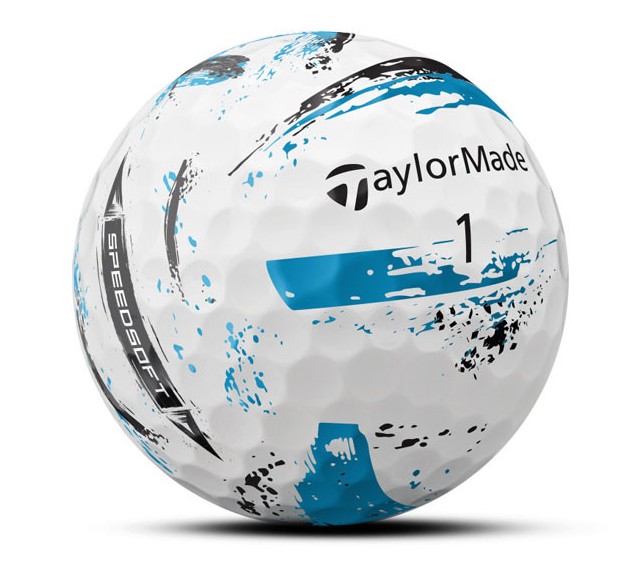 It’s one of those TaylorMade soft balls with the blue swishes.
I mess with it during the day… spin it, squeeze it, roll it around.
Part of it is just habit.
Part of it is the addiction.
And part of it?
It keeps golf close.
I’ll catch myself thinking about the sound it makes off the clubface…
what a clean strike feels like…
being out on the course instead of staring at emails.
I love my work – but let’s be honest…
Who wouldn’t rather be standing on a tee box somewhere?
And like most things with this game… that got me thinking.
Why is this thing the way it is?
Why 1.68 inches?
Why dimples?
Was it always like this?
So… I went down the rabbit hole.
You knew I would.
Why Golf Balls Are 1.68 Inches
The modern golf ball is 1.68 inches in diameter (max 1.62 ounces)—and that number isn’t random.
It became the standard when the United States Golf Association (USGA) set equipment rules to keep the game fair and consistent.
But here’s the twist…
• The British ball used to be smaller (1.62 inches) under The R&A (golf’s governing body for most of the world)
• Smaller ball = less drag = flew farther (especially in the wind)
For years, players could actually choose which ball to use depending on conditions.
Eventually, the game unified around 1.68 inches in 1990 to standardize competition worldwide.
Translation:
Golf chose fairness over a sneaky distance advantage.
Were Golf Balls Always This Way?
Not even close.
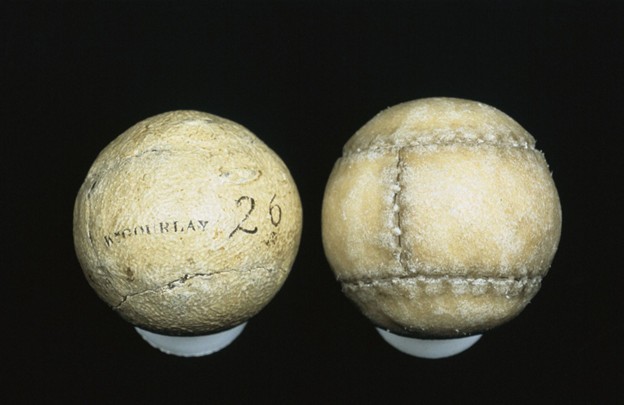 Golf balls went through a full identity crisis before becoming what we know today:
• Featherie (1600s–1800s)
Leather stuffed with feathers. Expensive. Fragile. Basically the luxury sports car of its time.
• Gutta-Percha Ball (mid-1800s)
Made from tree sap. Hard, cheap… and accidentally revolutionary.
Here’s where it gets interesting…
Players noticed something strange:
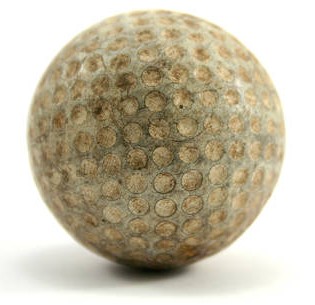
Old, beat-up balls flew better than brand-new smooth ones.
That one observation changed everything.
Instead of chasing perfection…
they started adding imperfections on purpose.
And just like that – dimples were born.
Why Dimples Matter (A Lot)
A smooth golf ball would be… terrible.
Dimples do two critical things:
• Reduce drag → helps the ball cut through the air
• Increase lift → helps it stay in the air longer
Without them?
You’re losing roughly half your distance.
So yeah… kind of important.
Most golf balls today have somewhere between 300–500 dimples, and companies tweak:
• Depth
• Pattern
• Edge shape
All to fine-tune flight, spin, and control.
Because of course they do.
 Modern Golf Ball Tech (This Is Where It Changes Your Game)
Today’s golf ball isn’t just a ball.
It’s a layered performance tool.
Core (The Engine)
• Usually rubber-based
• Controls distance and compression
Mantle Layers (The Middle)
• Fine-tune spin and energy transfer
Cover (The Feel)
This is where things really start to matter for your game:
Surlyn (Firm Cover)
• Durable
• Lower spin
• More distance
• Feels a little “clicky”
Great if you just want to hit it farther and keep things simple
Urethane (Soft Cover)
• Softer feel
• More spin (especially around the greens)
• Better control on chips and pitches
Great if you want more touch and control
Smooth vs Soft — What’s the Difference?
Quick version:
• Firm / Surlyn ball
= “Go far. Don’t overthink it.”
• Soft / Urethane ball
= “Let’s get a little creative around the greens.”
It’s not about better or worse.
It’s about what your game needs right now.
Is There a Standard for Dimples? (And What Do the Pros Actually Use?)
Here’s where it gets interesting…
There’s actually no rule from the United States Golf Association or The R&A that says how many dimples a golf ball has to have.
None.
The rules don’t care about dimples.
They care about:
• Size
• Weight
• Overall performance
But the dimples?
That’s up to the engineers.
Which is why most balls land somewhere between 300–500 dimples – not because they have to… but because that’s where performance tends to live.
Too few, and the ball won’t stay in the air long enough.
Too many, and things can get inconsistent.
So every company is chasing the same thing:
A ball that flies predictably, reacts consistently, and does what you expect when you hit it.
Just in slightly different ways.
What About the Pros?
Here’s the surprising part…
Tour players don’t sit around counting dimples.
They care about:
• How the ball feels
• How it reacts around the greens
• Whether it does the same thing every time
 And because of that…
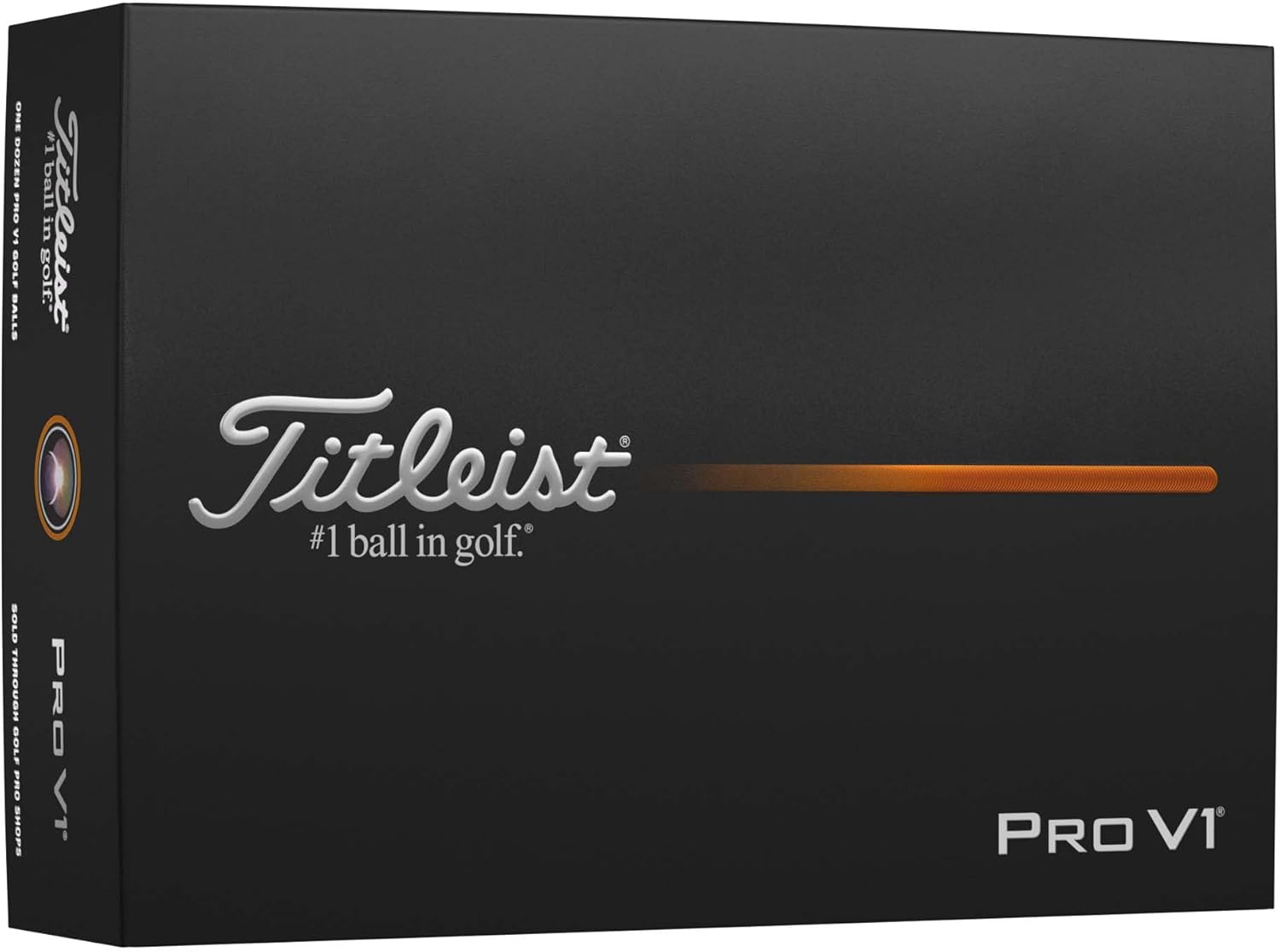
The most played ball on tour is the Titleist Pro V1 (and Pro V1x) – by a wide margin.
Not because it has more dimples.
Not because it’s flashy.
But because it’s consistent.
It flies how they expect.
It spins how they expect.
And under pressure…
It doesn’t surprise them.
And in golf… that might be the most valuable thing there is.
The Quiet Truth
Golf didn’t land on one perfect dimple pattern.
It landed on a range of designs that all work…
And then let players decide what feels right.
Why This Actually Matters to Your Game
Here’s the part nobody tells you when you’re starting out:
The golf ball you play… actually matters more than you think.
If you’re playing a firmer ball:
• You’ll probably get a little more distance
• Miss-hits won’t punish you as much
• But around the greens? It can feel a little unpredictable
If you’re playing a softer, urethane ball:
• You’ll get more spin and control
• Chips actually check up instead of rolling out forever
• Putts feel softer off the face
Real talk:
The ball either helps you control your game…
or helps you survive it.
And depending on the day…
You might need both.
The Real Takeaway
The golf ball didn’t just evolve…
It learned.
From feathers…
to tree sap…
to aerodynamic experiments with dimples…
to multi-layer precision tools.
And somehow…
It all landed on:
1.68 inches of engineered frustration and joy.
Same size.
Same rules.
Slightly different designs…
And somehow…
It still comes down to feel.
The Next Shot
Your next shot doesn’t have to be perfect – just intentional.
Loosen up. Then let the club do the work.
Real Talk. Play Better.
Effort builds results.
Let’s Hear It
What ball are you playing right now?
Drop it in the comments below or head over to The Clubhouse and tell us what’s working (and what’s not).
Because we’ve all had that moment mid-round where we switch balls and think:
“Yep… this is the one.”