
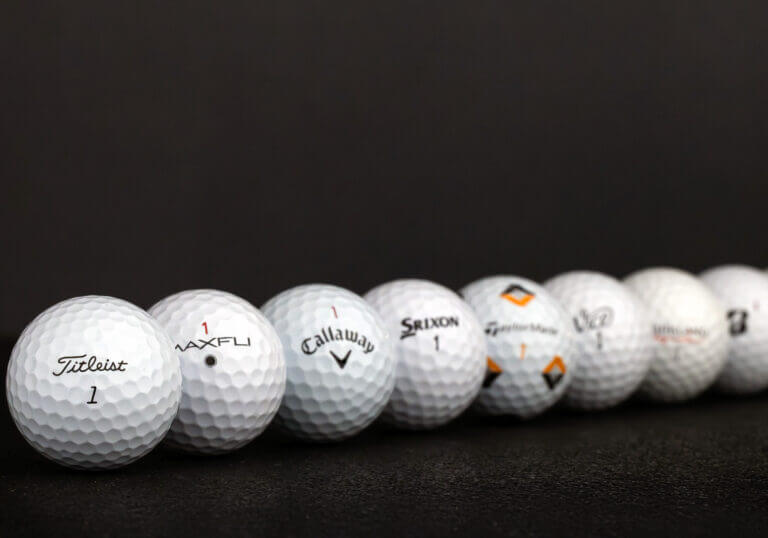
Blog Post The Ball That Changed Everything (Is It the Arrow… or the Archer?)
Settle in. Let’s talk golf.
When I first got into golf, one of the very first things on my mind was simple:
What’s the best golf ball for me?
Because if I picked the wrong one, was I already putting myself at a disadvantage?
And if we’re honest… marketing wins early.
The first name that popped into my head?
Titleist.
It’s iconic. Recognizable. The name you hear everywhere. It must be the best, right?
But then came the internal conflict.
I’m brand loyal.
My clubs are TaylorMade.
So naturally I thought… maybe I’ll play my best golf with TaylorMade balls.
Because obviously the logo alignment alone should knock 3 strokes off my score.
Soft, Yellow, and Surprisingly Impressive
Then someone handed me a sleeve of Titleist soft balls.
They felt great.
Really great.
And they were yellow.
Now for someone who occasionally introduces his ball to the adjoining fairway thanks to a confident slice… that visibility? Game changer.
I wasn’t just hitting better shots.
I was actually finding them.
Small win. Big impact.
The Indoor Net Era
Around the same time, I grabbed some cool-looking TaylorMade soft balls for indoor training.
They had cool blue brushstroke-style graphics on them – I mean, they had to be great.
Yes – the same ones I hit into the large net in my home office.
The same net my dog immediately runs away from the moment I pick up a club.
Smart dog.
Then I bought a bucket of used balls for my outdoor net sessions – the same sessions my neighbors probably watch thinking:
“We should check on him. This feels less like practice and more like obsession.”
They might not be wrong.
The Pro Influence
Then I started paying attention to commercials.
What do the pros use?
Would switching balls give me:
• Longer drives?
• More backspin?
• Better loft?
• That extra something that turns me into…
Scottie Scheffler?
Still waiting on that one.
Modern golf ball technology is serious business – compression cores, urethane covers, spin control layers, aerodynamic dimples.
It’s easy to think:
“This next sleeve is the one.”
We’ve all been there.
So… Does It Actually Matter?
Here’s where I landed.
Yes.
But also – it depends.
I do feel:
• Better connection
• Better control
• Better feedback
And research supports that different compression levels, spin profiles, and cover materials absolutely affect performance – just like someone preferring one set of irons over another.
Golf is personal.
Performance is personal.
Preference is personal.
Some players want:
• Soft feel around the greens
• Lower driver spin
• Maximum distance
• Tour-level control
• High visibility
Others just want something durable that doesn’t sting emotionally when it finds a pond.
Both are valid.
What I Learned
It’s not about matching your clubs.
It’s not about copying what the pros play.
It’s not about falling for the best commercial.
It’s about confidence.
If you stand over the ball believing in it, you swing freer.
If you like the feel, you commit more.
And commitment matters more than branding ever will.
Try a few brands.
Try different compressions.
Try yellow if you slice like I occasionally do. (Okay… more than occasionally.)
Pay attention.
Then come tell us what you found.
Drop It in The Clubhouse
This one will stir opinions – and that’s a good thing.
What ball do you play?
Why?
Have you switched and noticed a difference?
Post your thoughts in The Clubhouse or in the Comments section below. Let’s talk golf geek.
The Next Shot
Go test something new.
Not because marketing told you to.
Not because a tour pro plays it.
But because finding the right feel builds confidence.
And confidence builds better swings – which builds better scores.
Real Talk. Play Better.
Effort builds results.